

Key takeaways about a porn relapse
-
A porn relapse is a temporary return to use after abstinence, not a failure of recovery.
-
What matters most is how quickly you interrupt the pattern and return to your recovery plan.
-
A single slip does not erase progress unless it turns into abandoning recovery altogether.
-
Relapses are typically triggered by stress, boredom, loneliness, fatigue, or habit cues—not lack of willpower.
-
The biggest risk after relapse is the “all-or-nothing” mindset that leads to binge behavior.
-
Immediate actions like changing environment and interrupting isolation help stop escalation.
-
Identifying triggers turns relapse into useful information rather than a sign of failure.
-
Long-term recovery depends on consistency, structure, and learning from setbacks rather than avoiding them entirely.
Frequently asked questions about porn relapse
What is a porn relapse?
A porn relapse is returning to pornography use after trying to quit. It becomes a true relapse when it leads to abandoning recovery, rather than a single slip followed by getting back on track.
Does a relapse mean I failed?
No. Relapses are common in behavior change and do not erase progress. What matters is how you respond and whether you return to recovery quickly.
Why do porn relapses happen?
Relapses are usually triggered by stress, boredom, loneliness, fatigue, or environmental cues—not a lack of willpower. Porn often acts as a coping mechanism for these states.
What should I do immediately after a relapse?
Stay calm, avoid overreacting, interrupt the pattern, change your environment, and identify what triggered the behavior so you can adjust your plan.
How do I prevent future relapses?
Preventing relapse involves identifying triggers, building structured routines, reducing exposure to cues, and having a clear plan for handling urges when they arise.
Relay is a therapist-backed group recovery program for pornography and unwanted sexual behavior, combining daily accountability, real-time urge support, and a private peer community
Dealing with a porn relapse: What to do next (without spiraling)
If you’re here, there’s a good chance you recently relapsed and watched porn after a period of trying to quit. Let me tell you something I’ve realized, both from kicking porn and getting sober:
Relapses happen so often that they almost seem to be part of the definition of recovery. I’m not saying that you have to suffer a relapse to make progress. I just want you to realize that you are not broken and that this is not the end.
But in the moment, it can feel that way.
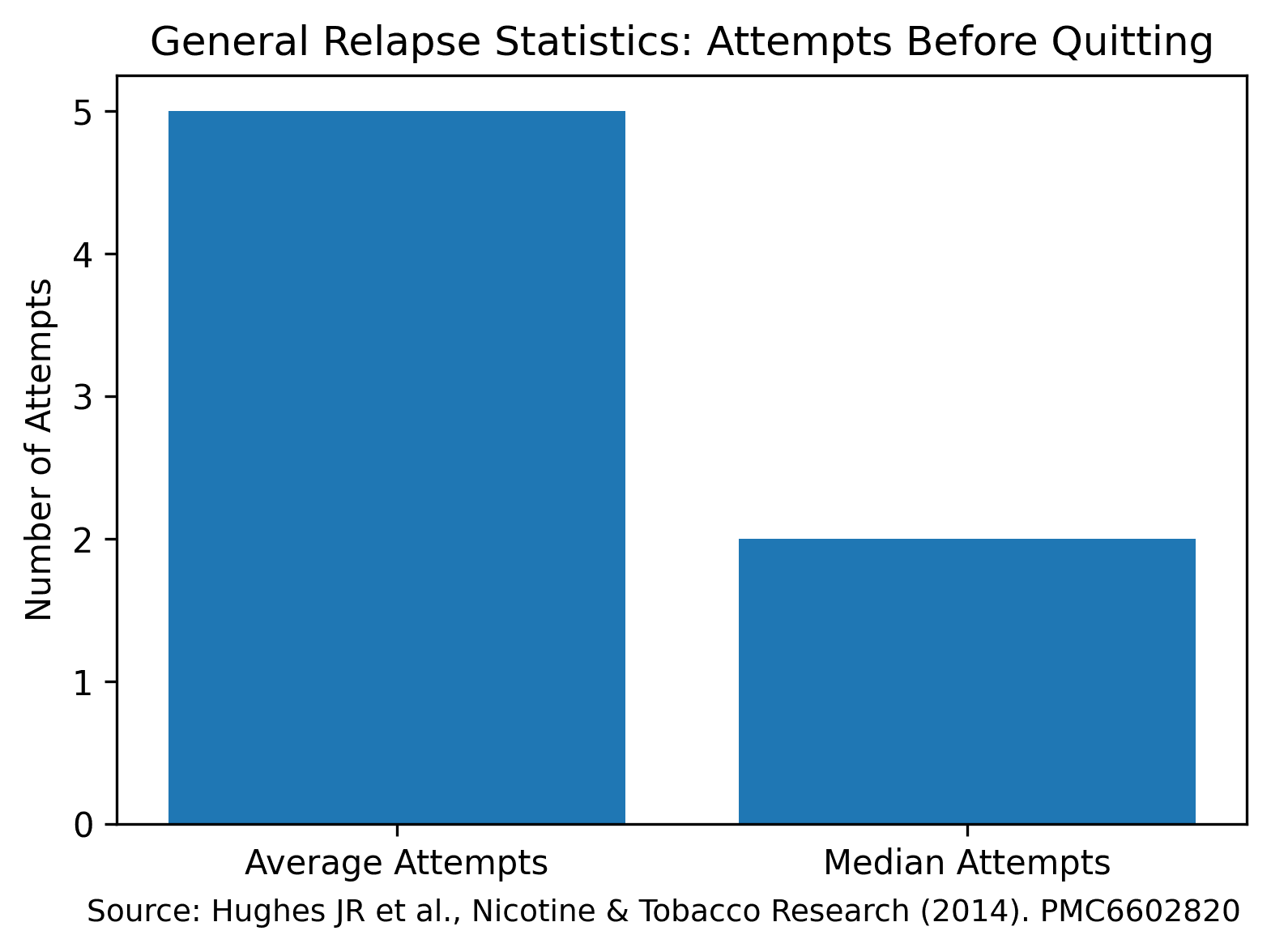
It’s reported that it takes the average person 5 times to stop abusing potentially addictive substances, but the median is 2 times (Kelly et al., 2019).
For more a complete run down of what to expect in porn recovery, read about the quitting porn recovery timeline.
Another way to read these numbers:
Most people fall off the wagon at least once, while a few fall off a lot more than that, but they all eventually get their addictions under control. But in the moment, it feels like a terrible setback.
Shame kicks in. Motivation collapses. You start questioning whether all your progress was fake or pointless.
Here’s the most important thing to understand right away:
A porn relapse does not erase your progress, and it does not mean you’ve failed at recovery. You’ve already proven to yourself that you can do this. The relapse was just a blip on the radar.
Further reading: How long does it take to recover from porn addiction
What matters most is not what just happened, but what you do next.
This post is about getting back on the wagon quickly, without beating yourself and feeling hopeless. If you follow the advice on this page, you’ll keep a slip from spiraling and get back on track so quickly that you don’t even remember messing up.
For an in-depth guide that can help you finally kick the porn habit without worrying about a relapse, read this article here.
First: A Slip Is Not the Same as a Relapse
One of the biggest mistakes people make after watching porn is assuming they’ve completely fallen off the wagon. Mistakes happen, you are human, and it is simply not true that you are done being in recovery.
It’s called “recovery,” not “recovered,” because it’s a process. Here’s something to keep in mind:
A slip is a single episode followed by an immediate return to recovery. A relapse is abandoning recovery altogether and returning to old patterns.
You get to decide which one it will be for you by how you respond.
Many people experience a slip and turn it into a relapse by giving up mentally, but it doesn’t have to be that way.
I don’t want you to interpret this as me telling you that it’s ok that you watch porn if you’re trying to break your addiction.
I want you to understand that one slip-up does not undo what you’re trying to accomplish by quitting porn.
Why Porn Relapse Happens (And Why It’s Not About Willpower)
Relapse usually isn’t caused by a lack of discipline or motivation.
More often, it’s triggered by stress or emotional overload, loneliness or isolation, fatigue or burnout, boredom or unstructured time, or habitual cues like late-night phone use. This is part of the reason why any good plan for quitting porn involves keeping yourself busy and changing your peripheral habits.
Porn is also designed in a way that makes it difficult for your brain to stop thinking about, and this is very much by design.
Porn often functions as a coping mechanism, not just a sexual habit. When stress increases or routines break down, the brain reaches for what it knows works quickly.
Understanding this matters because it shifts your focus from self-blame to problem-solving. It also helps you develop strategies to prevent relapse.
But what should you do if you feel like your slip-up is more than that, and you’re on the brink of a relapse?
What To Do Immediately After a Porn Relapse
What you do in the moments after a slip-up determines if it will just be a one-time thing or a slippery slope back to your old habits.
Here is what I’ve found works best to regain discipline, focus, and commitment.
Don’t Panic or Overcorrect
Your first instinct might be to freak out, punish yourself, or impose extreme rules.
That usually backfires.
A helpful analogy: if you drift slightly while driving, you don’t slam the steering wheel in the opposite direction. You gently correct and stay on the road.
Calm correction beats emotional overreaction.
With that said, you also wouldn’t let the car keep drifting without some attempt at course correction.
In other words, you have to treat it seriously and recognize that something went wrong in your plan, but drastic reactions and brutal attempts at overcorrection rarely make things better. In fact, because of what we know about how dopamine is lowered during times of stress, you may feel more motivated to watch because you’re making yourself feel bad.
Avoid the All-or-Nothing Trap
There’s an old saying:
“Don’t throw good money after bad.”
What this means is that if you have already wasted money, you shouldn’t continue to waste money just because you already did it.
It’s a poetic expression of the sunk-cost fallacy, where you continue on a course of action after realizing it’s incorrect just because you’ve already invested so much time into it.
A slip-up is like that.
You figure that you might as well go full-throttle since you already messed up once, but that’s a version of the sunk-cost fallacy.
One of the most dangerous thoughts after a relapse is, “I already messed up, so what’s the point now?”
This mindset turns a mistake into a binge.
Watching porn once does not undo weeks—or months—of progress. Recovery isn’t measured by perfection. It’s measured by how quickly you regain control.
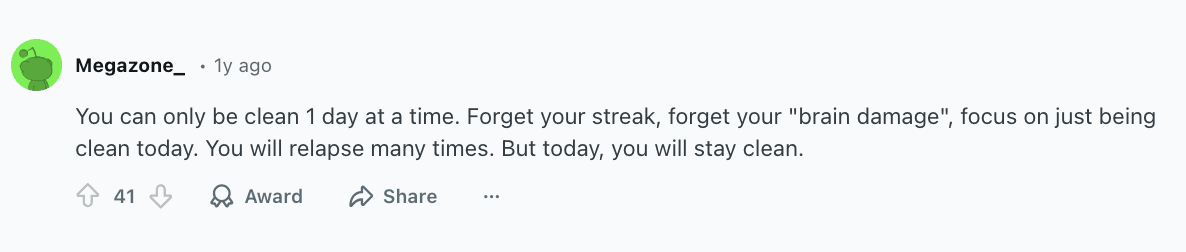
There’s a reason why a popular saying in recovery is “One day at a time.” All you have to do is the day, but if you lose one battle, that’s no excuse to quit fighting the whole war.
Interrupt the Pattern Immediately
Relapse becomes dangerous when it turns into isolation.
As soon as possible, change your environment, get out of the room you were in, put space between yourself and the trigger, and do something physical like walking, showering, or stretching.
Small actions help break momentum.
Further reading: How to use urge surfing to quit porn addiction faster
I used to tell guys in my group to do push-ups or go for a run. I also make sure they understand that sitting in front of a screen is a bad idea because it can often remind you of the things that make you want to watch porn.
So it’s important to change your environment not just to prevent relapse, but also to clear your head and regain focus.
Identify What Actually Triggered This
Once the emotional intensity settles, it’s time to look at this practically.
Ask yourself what you were feeling right before this happened, whether you were stressed, lonely, tired, or bored, whether your routine changed, and whether you were alone with unrestricted access.
Relapse often reveals new or shifting triggers. Identifying them turns the experience into information instead of evidence of failure.
Further reading: Porn addiction withdrawals
Get Back Into Recovery Mode (Not Back to Square One)
You are not starting over.
You already know what works better than you did the first time you quit porn.
When it comes to making progress over long time periods, you need to remember the lessons you learned and forget the mistakes. Otherwise, you might focus only on the mistakes rather than the lessons.
By the way, this is a cognitive bias called “loss-aversion,” in which you pay more attention to the negative than to the positive, even when they have equal impact.
Your natural tendency is to forget that you’ve already done a good job and you learned a lot, and to only focus on the mistake. But you can’t do that.
Now is the time to re-establish your routines, recommit to the habits that helped you stay porn-free, and make a simple plan for what to do when urges return.
Helpful options include exercise or movement, journaling, creative outlets, calling or messaging someone you trust, using accountability tools or blockers, and revisiting your original reasons for quitting.
Remember: Progress Still Counts
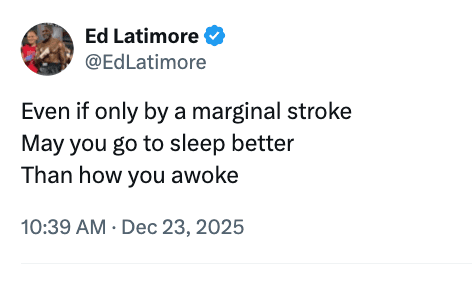
If you were porn-free for three weeks and slipped once, you didn’t lose three weeks.
You proved that abstinence is possible.
Those days still count. The confidence you built still matters. Recovery isn’t erased by imperfection.
When to Consider Extra Support
If a relapse turns into repeated loss of control, or if you feel stuck in a cycle you can’t break on your own, additional support may help.
A challenge like Nofap can give you a boost of motivation, but what you really might need is support and guidance.
That could include talking with a therapist, joining a support group, or using structured recovery resources like Relay.
In Relay, you work in a groups with licensed counselors and recovery specialists to help you finally get this porn habit for good. Learn more and give Relay a free 7-day trial.
Seeking help isn’t failure—it’s strategy.
The Bottom Line
A porn relapse can feel discouraging, but it doesn’t define you.
What matters most is your response. Don’t spiral. Don’t isolate. Don’t give up.
Correct calmly. Learn from what happened. Re-engage with recovery.
You are not broken—and this moment does not decide your future.
References
Kelly, J. F., Greene, M. C., Bergman, B. G., White, W. L., & Hoeppner, B. B. (2019). How many recovery attempts does it take to successfully resolve an alcohol or drug problem? Estimates and correlates from a national study of recovering U.S. adults. Alcoholism: Clinical and Experimental Research, 43(7), 1533–1544. https://doi.org/10.1111/acer.14067
PMID: 31090945 · PMCID: PMC6602820